


When you need it, it’s there.
Flashbacks don’t schedule appointments. Panic attacks don’t care that your therapist’s office is closed. Hypervigilance doesn’t take the weekend off.
If you’re living with PTSD or C-PTSD, you already know this. Symptoms ambush you — at 2am, during your commute, in the middle of a family dinner. And when they hit, and you feel like you’re drowning, you don’t need someone to teach you to swim. 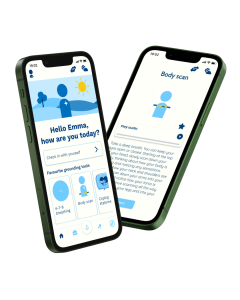
You need something to grab onto. Now.
That’s why remind exists. Not as another mental health app with a trauma label. As the PTSD toolkit that was purpose-built for the moments when symptoms are winning and everything else is closed.
Built with and recommended by PTSD UK
PTSD UK have supported remind from day one with the development of the app. From sharing the first survey, members of our community have taken part in the user research, the pilots and testing of the app.
PTSD UK recommends remind as a trusted tool for managing PTSD and trauma symptoms. It works alongside NHS treatment, private therapy, or as standalone support on your recovery journey.
Built with care. Shaped by lived experience. Guided by clinical expertise. Informed by real-world data from hundreds of people who told us what actually helps.
Why remind is different
Most mental health apps were designed for general wellness — journaling, meditation, gradual progress. PTSD doesn’t work that way. You need tools that respond to the urgency of your symptoms, not a gentle suggestion to breathe.
remind was built by someone who lived with PTSD. Who needed help at 3am. Who couldn’t wait for next Tuesday’s session. Who watched the mental health system fail people — not because clinicians don’t care, but because the system wasn’t built for how PTSD actually works.
remind was created to work when trauma is winning. 
Its grounding tools are built on trauma-focused CBT, behavioural activation, and positive psychology — the same evidence base recommended by NICE guidelines for PTSD treatment.
The difference is that they’re in your pocket, 24/7, ready when you need them.
The evidence
Their data shows grounding tools help users 9 times out of 10. That’s not hope. That’s real.
85% of users call remind a key part of their mental health toolkit. Not a nice-to-have — essential.
3 in 5 sessions happen outside office hours. Because PTSD doesn’t work 9–5. Neither does remind.
What’s inside
- Relieve: 20+ grounding tools built for PTSD symptoms — flashbacks, dissociation, panic, hyperarousal. Immediate relief when symptoms hit. Not a 10-week programme. Right now.
- Track: Monitor your triggers and symptoms in a private, judgment-free space. Understand your patterns. Share insights with your clinician if you choose — or keep them for yourself.
- Learn: See which coping tools work best for your specific symptoms. Data-driven insights that put you back in control of your recovery.
- Understand: Trusted psychoeducation about PTSD, C-PTSD, and trauma recovery — including our podcast, expert resources, and guidance on treatment options.
You don’t need permission to get help
You don’t need a formal diagnosis. You don’t need your symptoms to be ‘bad enough.’ You don’t need anyone’s permission.
If PTSD or trauma is affecting your sleep, your work, your relationships, your ability to feel safe — remind is for you.
Abuse. Assault. Loss. Medical trauma. Birth trauma. Combat. Accidents. Domestic violence. Workplace incidents. The type of trauma doesn’t matter. What matters is this: you’re experiencing symptoms, and you deserve tools that actually help.
Why remind exists
“After being caught up in a terror attack, I couldn’t sleep. I couldn’t get on the tube. I couldn’t go for drinks with friends. I couldn’t explain what was happening to the people I loved. The system couldn’t help me in the moments I needed it most.
So I built something that could. With input from hundreds with PTSD & clinical experts. Based on what works.
For people like me.
For people like you.
For the 3 in 4 who don’t get support.”
— Freya Hickman, Founder and Trauma Survivor
Are you looking to help someone with PTSD?
When someone you love is trapped in trauma, helplessness hurts.
remind gives them a lifeline that’s there when you can’t be. 3 in 5 sessions happen outside office hours — when flashbacks strike at 2am, when panic hits during the commute, when symptoms ambush daily life. You can’t always be there. remind can. 
In the words of remind users
“It’s the only help I’ve managed to find in decades.”
“I can access the app 24/7 and know it will have some resource available.”
‘’It’s useful for trying to track triggers & I love the grounding tools”
Start taking back control
7-day free trial. Then £7.99/month or £79.99/year. Cancel anytime.
When you sign up with code ptsduk, £1 in every £5 goes directly to PTSD UK — helping us continue supporting hundreds of thousands of people living with PTSD and C-PTSD across the UK.
Sign up here via APPLE APP STORE or GOOGLE PLAY STORE or by clicking the buttons below


Invisible Prison
The Invisible Prison: Living with Complex PTSD In this guest post, Billy McKay writes about growing up in Glasgow and how the things he learned as a child about staying safe shaped the person he became. Billy lives with C-PTSD,

PTSD: The Monstrous Conductor
Guest post: ‘The Monstrous Conductor’ We’re honoured to share a deeply moving and beautifully written piece by Emma. At just 16, Emma poured her heart into The Monstrous Conductor, a creative essay that captures her experience of PTSD and flashbacks—expressed through her love
Drowning drama
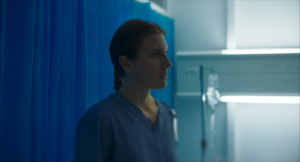
PTSD and the importance of authentic representation on screen: ‘Drowning’ PTSD and C-PTSD are often misunderstood, both on and off screen. Portrayals in the media frequently focus on dramatic flashbacks or military experiences, but the reality of living with PTSD
Writing poetry
Why writing poetry might help you with PTSD Writing has always been Fiona Fletcher Reid’s way of making sense of things. So when she began therapy for her trauma and found she could no longer face the page, the loss

why I made traumality
Why I Made TRAUMALITY – Guest Post This is a guest post by Ton Mazzone, director of the documentary TRAUMALITY, which we’re screening online with him on Tuesday 6 October 2026. Ton spent four years and spoke to 22 experts
The cost of birth trauma
Birth trauma is costing the NHS millions, and most people affected still aren’t getting help A report launched in Parliament this month is the first to work out what Post Traumatic Stress Disorder after childbirth costs the NHS. It comes