
Every year, June marks PTSD Awareness Month and we’d love for you to get involved and help us raise our voice, shout louder and drive towards our mission to help support EVERYONE affected by Post Traumatic Stress Disorder (PTSD and C-PTSD), no matter the trauma that caused it. 
Of course, for someone affected by PTSD or C-PTSD, EVERY DAY is significant in terms of how their lives are impacted, but for some people, they’re simply not getting the help they want, need or deserve – and we want to help change that!
Simply put, having a specific month that is recognised around the world brings our voice together. It gets people talking where they maybe otherwise wouldn’t. It helps reach more people with the message that Tomorrow CAN be a New Day. Read our blog post here for more information abut what PTSD Awareness Month is, and it’s history.

Emotional numbness
Emotional numbness in PTSD & C-PTSD One of the most misunderstood symptoms of Post Traumatic Stress Disorder is also one of the most painful – not because it hurts, but because it doesn’t. Emotional numbing is the experience of feeling

Biological Markers of Trauma Research
Can PTSD be detected through a blood test? New research into biological markers of trauma For many people living with Post Traumatic Stress Disorder (PTSD) or Complex PTSD (C-PTSD), getting an accurate diagnosis can take months or even years. Symptoms

Assistance Dog for PTSD Case Study: Pumpkin
Assistance Dog for C-PTSD Case Study: Pumpkin Assistance dogs have long been recognised as valuable companions for individuals with physical disabilities, however, their ability to also aid those struggling with mental health conditions, like PTSD and C-PTSD is becoming more

TayatheTortoise
Taya the Tortoise: A Trauma-Informed Activity Book Helping Children Feel Safe, Seen, and Understood Supporting children who bottle things up, retreat, or disconnect At PTSD UK, we often talk about how trauma doesn’t always look the way people expect. Some

Adoption
Guest Blog: Relinquishment Trauma: Understanding the Lifelong Impact of Adoption This powerful guest blog shares the deeply personal experience of growing up as an adoptee and the lifelong impact that early separation can have. From the outside, life may look
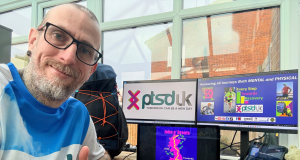
Dave King
“I Spent 30 Years in Silence”: Veteran to Run 1,000 Miles Across Britain for PTSD Awareness This May, British Army veteran Dave King will take on an extraordinary physical and emotional challenge – running from John O’Groats to Land’s End